
Introduction: Why elevator lobbies need vertical Wall Art
Elevator lobbies are small spaces with big expectations. They set the tone for an office floor, a hotel corridor, or a residential building before anyone steps into a unit or a meeting. Yet these areas often share the same problem: tall walls, narrow sightlines, and a feeling of “blank height” that makes the space look unfinished.
Vertical Wall Art is one of the simplest ways to bring structure to that height. A well-sized Canvas Print can guide the eye upward, add rhythm, and give the lobby a clear focal point without crowding door frames, call buttons, or signage.
In this guide, you’ll learn how to plan vertical Artwork for elevator lobbies: how to choose the right format, how to size it for tall walls, how to handle lighting, and which themes work best in commercial settings.
Why vertical Canvas Art works in elevator lobbies
Built for narrow, upright spaces
Most elevator lobbies are shaped like a short corridor: doors, metal panels, and vertical lines everywhere. A vertical Art Print naturally fits that geometry. It feels intentional because its shape matches the architecture, especially on a wall between elevator doors, on a side wall near the waiting zone, or on a return wall that you see as you exit the elevator.
Fast read time for people on the move
In lobbies, people rarely stand still for long. They glance, check their phones, and walk. Vertical Paintings with a clear subject, strong contrast, or a simple composition are easier to read in a few seconds than a busy horizontal piece that needs time and distance.
Helps shape first impressions
A lobby can feel cold when it’s only glass, stone, and metal. Wall Decor adds warmth and gives visitors a clear signal that the building is cared for. When the art is scaled correctly, it also makes the space feel more finished, even when the lobby is small.
Pick the right format for tall walls
Single-panel vertical Canvas Print
A one-piece Canvas Print is the most direct option. It works well when the wall is narrow, when you need to keep clear space around signage, or when you want a strong focal point that reads from both inside the elevator and across the lobby.
Multi-panel Wall Hangings
If your elevator bank is wide, a multi-panel set can cover more wall without becoming one oversized block. Two to five panels can stretch the visual width while keeping a vertical flow. This is useful when you’re working with long walls that people walk alongside.
Stacked art sets
Another smart approach is a stacked set: two or three frames or canvases placed top-to-bottom with consistent spacing. This method creates a clean “column” that fits tight walls and keeps the composition tall without needing a single huge piece.
Sizing rules for “tall wall monotony”
The biggest mistake in elevator lobbies is choosing Wall Art that is too small. A small piece on a tall wall looks lost. Instead, plan size based on how far people stand from the wall and how much uninterrupted wall space you actually have.
Quick sizing guide for elevator lobbies
- Narrow wall between doors: choose a vertical canvas that fills a strong portion of the wall height, while leaving comfortable clearance from the door casing and call panel.
- Side wall near the waiting area: go larger, because people pause there and can take in details.
- Long corridor-style lobby: use a series of vertical pieces spaced evenly, so the wall feels planned instead of random.
Large Wall Art vs. extra-large statements
Large Wall Art is often the sweet spot: it’s bold enough to hold a tall wall, but still easy to place around building features. Extra-large pieces can look stunning, but they require more planning so they don’t interfere with signs, lighting controls, sprinklers, or safety equipment. When in doubt, measure the clear wall zone first and size the art to that rectangle rather than guessing.
Spacing rules that keep it clean
Vertical pieces need breathing room. Keep consistent margins from door trim, corners, and ceiling lines. If you’re using multiple panels, keep the gaps even so the set reads as one design. Consistency matters more than tight spacing.
Color, lighting, and surface planning
Working with bright elevator lighting
Elevator lobbies often use strong overhead lighting. That can wash out low-contrast images and make glossy surfaces distracting. When you’re choosing Canvas Art, look for clear contrast and details that hold up under bright lights. If the lobby has reflective stone or metal walls, choose imagery that doesn’t rely on subtle gradients.
Choosing a palette that fits the building
Instead of trying to match every color in the space, aim for a palette that supports the overall feel: clean, calm, and professional. A few strong tones repeated in the art can tie together flooring, door finishes, and wall paint without making the lobby feel busy.
When black-and-white works best
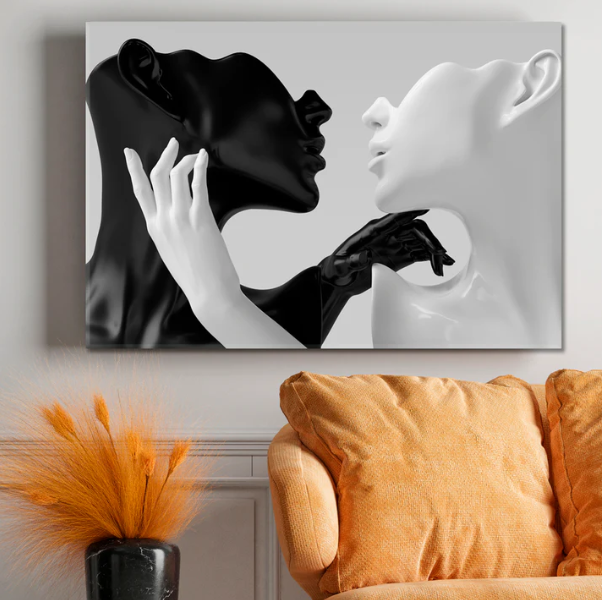
Black-and-white Artwork can be a strong solution for elevator lobbies because it pairs well with metal doors and modern interiors. It also reduces the risk of clashing with brand colors or tenant decor. If you prefer color, choose one dominant hue and keep the rest restrained.
Theme directions that fit elevator lobbies
Abstract Wall Art for a clean, modern look
Abstract compositions work well in shared spaces because they don’t demand a single interpretation and they look good from both near and far. They also pair well with the vertical lines already present in elevator areas. If you want a strong starting point, browse abstract wall art prints and filter by tall formats and bold contrast.
Business and concept-driven Artwork for offices
For office buildings, themes that hint at progress, teamwork, architecture, or clean geometric forms can match the setting without feeling too personal. Keep the imagery professional and avoid overly detailed scenes that look cluttered when viewed in motion.
Calm nature cues for mixed-use buildings
In residential or mixed-use towers, nature-inspired prints can soften hard surfaces and make the lobby feel more welcoming. Choose landscapes, trees, or sky themes with a clear horizon or vertical structure so the art still “fits” the wall shape.
Placement and install checklist
Elevator lobbies are functional spaces with safety rules, heavy foot traffic, and frequent cleaning. Your wall hangings should look great, but they also need to be placed responsibly.
A practical installation checklist
- Map the “no-go” zone: keep clear of call buttons, fire panels, signage, and door swing areas.
- Set the viewing height: hang the center of the main image where most people naturally look while standing and waiting.
- Plan for traffic: avoid placing art where bags, carts, or strollers will scrape the edges.
- Use proper anchors: elevator lobbies often have drywall over concrete or special wall systems; use anchors rated for the wall type.
- Keep spacing consistent: for sets, measure gaps precisely so the result looks planned.
One focal point vs. a repeated rhythm
If the lobby has a single feature wall, one large Canvas Print can be enough. If the lobby is long, repeated vertical pieces can create a steady rhythm that guides people through the space. The right choice depends on how many walls people see and how long they stay in the area.
What to look for in a Canvas Print for commercial spaces
Elevator lobbies demand reliability. Choose prints that hold detail, look sharp under bright lights, and feel solid on the wall. In commercial settings, people notice when art looks flimsy or under-sized. A sturdy canvas stretched on a strong frame helps the piece feel like part of the building, not a last-minute add-on.
Key features that work well in elevator areas
- Clear composition that reads quickly from a few steps away
- Strong contrast that holds up under overhead lighting
- Sturdy frame and secure mounting so it stays straight over time
- Sizes that suit tall walls without crowding doors or signage
Common mistakes to avoid in elevator lobbies
Going too small
A small print on a tall wall looks like an afterthought. If your wall is tall, your art needs enough height to feel intentional.
Overcrowding key building features
Don’t place art too close to call panels, signs, or emergency equipment. Give these features clear space so the lobby stays functional and code-friendly.
Using busy images in tight spaces
Busy scenes can look chaotic when people only see them for a moment. In a narrow lobby, simpler compositions usually work better than densely detailed images.
Frequently asked questions
1) What kind of Wall Art works best for an elevator lobby?
Vertical Canvas Art and tall Art Prints usually work best because they match the wall shape and read well in narrow spaces.
2) Should I choose one large piece or multiple pieces?
Use one large piece for a feature wall. Use multiple pieces when you have a long wall and want a steady, planned rhythm.
3) How do I choose a theme for a commercial elevator lobby?
Start with the building type. Offices often suit clean abstract or concept themes. Residential spaces often suit calm nature cues.
4) Where should art go inside an elevator lobby?
Great spots include a main waiting-wall, a side return wall, or a wall between elevator doors (if there is enough clear space).
5) How high should I hang a vertical Canvas Print?
Hang it so the center of the main image sits near natural eye level for most adults, while keeping clear of signage and panels.
6) What if the wall is very tall?
Choose a taller canvas or use a stacked set. The goal is to fill the wall height enough that it feels planned.
7) Can I use color in a lobby with metal elevator doors?
Yes. Pick one strong color family and keep the rest calm so it pairs well with metal and stone finishes.
8) What’s the safest way to mount Wall Hangings in a high-traffic area?
Use anchors rated for the wall type, double-check level, and avoid mounting where carts or bags regularly pass close to the wall.
9) Do I need to match the art to the building’s brand colors?
Not always. Many lobbies look best with neutral art that supports the interior without copying brand colors exactly.
10) What style works for luxury residential elevator lobbies?
Clean abstract, calm landscape themes, and black-and-white prints often work well because they pair with premium finishes.
11) What style works for busy office towers?
Choose clear compositions with strong contrast that read quickly for people moving through the space.
12) How can I make a long lobby wall look planned?
Use a repeated set of vertical prints with consistent spacing and a shared color direction.
13) Can wall decor help a lobby feel warmer?
Yes. Canvas Prints can soften hard surfaces like stone and metal and make the space feel more welcoming.
14) What’s a safe approach if I’m unsure about size?
Measure the clear wall zone first, then pick a canvas size that fills a strong portion of that rectangle without crowding doors or panels.
15) Where can I shop office-friendly wall art for lobby spaces?
For office settings, start with office wall art and filter by tall formats and clean compositions that fit elevator areas.
Conclusion: A simple plan for vertical Art in elevator lobbies
Elevator lobbies don’t need complicated decor to feel finished. Start by choosing a vertical format that fits the wall shape, size it to the clear wall zone, and pick a theme that matches the building. Add smart spacing and careful mounting, and your lobby will look more planned the moment people step out of the elevator.