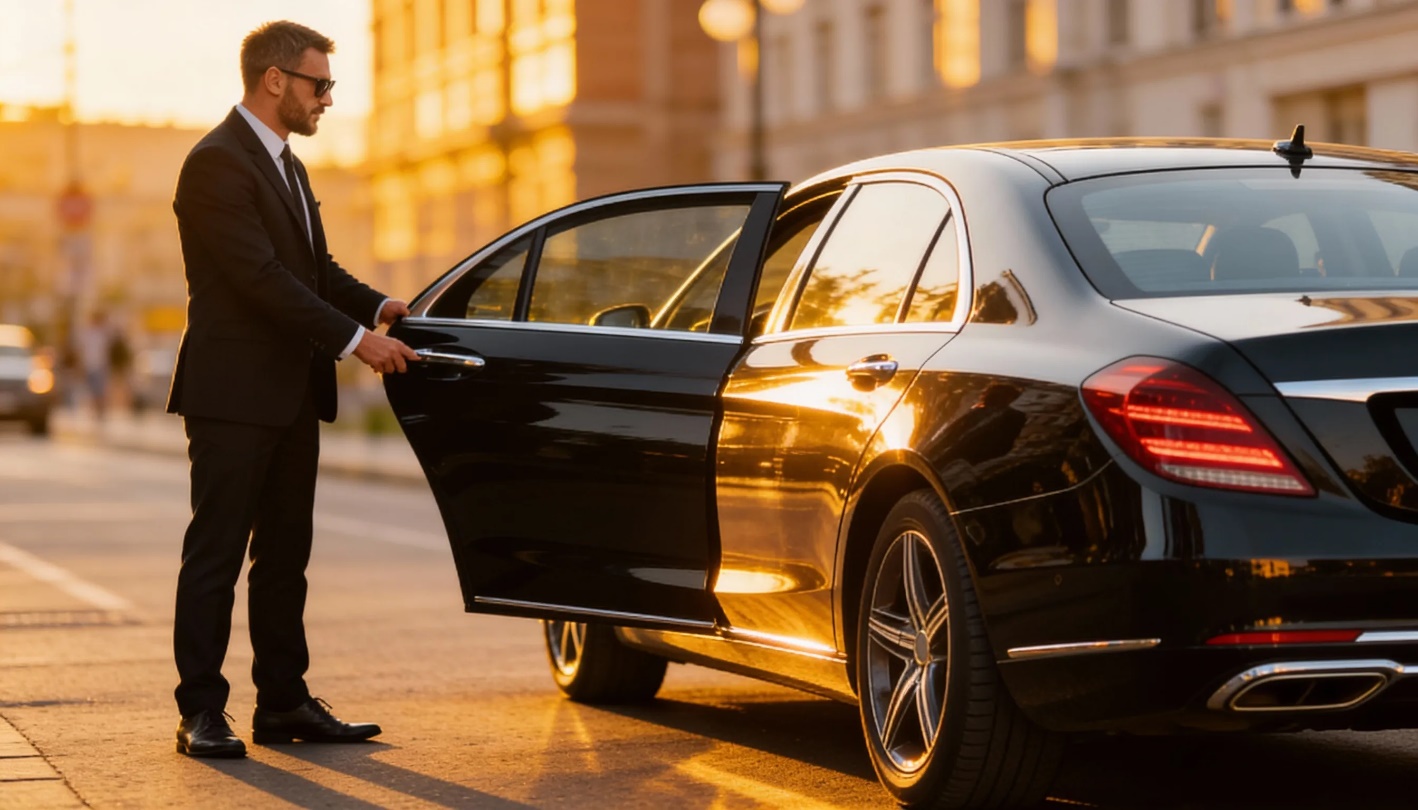
Chauffeur Service vs. Uber Black in DFW: What’s the Difference?
You’ve just landed at DFW Airport after a six-hour flight. Your back aches, you’ve got three bags to wrangle, and the last thing you want to deal with is transportation drama.
You pull out your phone and open your rideshare app. Uber Black pops up as an option. It looks professional. The car icons are sleek black sedans. The pricing seems reasonable enough.
Then you wonder—is this actually different from just booking a regular chauffeur service? Or is it basically the same thing with a fancier app interface?
Welcome to one of the most common questions facing business travelers and anyone seeking premium transportation in the Dallas-Fort Worth area. The difference between Uber Black and professional chauffeur service isn’t just semantic—it’s the gap between hoping your ride works out and knowing it will.
Let me break down exactly what separates these two options, why that gap matters more than you think, and how to choose the right service when reliability actually counts.
Why Uber Black Isn’t What You Think It Is
Here’s something Uber’s marketing won’t emphasize: “Black” is a tier designation within their rideshare platform, not a dedicated luxury car service.
Think about what that means practically. You’re still using the same on-demand app that connects riders with independent contractor drivers. The algorithm still controls pricing. Surge multipliers still kick in during peak times. Drivers can still cancel on you.
The only real differences? The car has to be a luxury model. The driver needs commercial insurance. They have to maintain higher ratings than regular Uber drivers.
But fundamentally, you’re still operating within the rideshare framework—a system designed for convenience and volume, not for guaranteed reliability when it matters most.
This creates the central problem with Uber Black: it promises a premium experience but delivers it through a platform built for casual transportation. The expectations don’t match the infrastructure.
For established chauffeur services operating in Fort Worth, their entire business model centers on one concept—you’re paying for certainty, not just transportation. Every system, every policy, every driver training session focuses on eliminating variables that could go wrong.
But with Uber Black? You’re still rolling the dice, just with slightly better odds than standard Uber.
The Booking Experience Reality Check
You need to be at DFW Airport by 5 AM for an important flight. How does each service handle this?
With Uber Black, you open the app around 4:15 AM and request a ride. The app searches for available drivers. Maybe one accepts immediately. Maybe you wait three minutes while it searches. Maybe the first driver cancels and you’re back to searching.
Now imagine the driver who finally accepts is 12 minutes away. You’re watching the clock tick. Your stress level rises. You’re mentally calculating whether you should cancel and try again or stick it out and hope they don’t cancel on you.
Professional chauffeur services work completely differently. You booked this ride three days ago. Your confirmation email has the driver’s name, the exact vehicle you’ll be riding in, and a direct phone number to reach them. At 4:55 AM, your chauffeur pulls up to your address—early, as always.
One scenario is gambling that the app’s algorithm connects you with a driver who doesn’t cancel. The other is a guaranteed reservation that exists in a dispatch system regardless of surge pricing or driver availability.
See the difference? It’s not about luxury versus luxury. It’s about hoping versus knowing.
Driver Quality: The Professional Gap Nobody Talks About
This is where the gap between Uber Black and professional chauffeur service becomes impossible to ignore.
Uber Black drivers meet certain requirements. They need newer vehicles, commercial insurance, background checks, and have to maintain ratings above a certain threshold. Those aren’t meaningless standards.
However, most Uber Black drivers are part-time contractors. Someone driving Uber Black on evenings and weekends to supplement their primary income. Their training comes from watching instructional videos and learning through trial and error.
Compare that to professional chauffeur services hiring career drivers with ten-plus years navigating DFW roads. These folks have undergone extensive customer service training. They know how to read clients—when silence is preferred, when conversation is welcome, how to handle high-pressure situations smoothly.
I’ve heard countless stories from business travelers about the difference. The Uber Black driver who got lost despite GPS because they didn’t know the area. The driver who kept making small talk when the passenger was clearly on an important call. The driver who showed up in a vehicle that technically qualified as luxury but felt anything but.
Professional chauffeurs understand something fundamental: their job isn’t just driving from point A to point B. It’s creating an environment where you can prepare for that meeting, decompress after a long day, or simply exist without stress.
That level of awareness doesn’t come from app-based training modules. It comes from years of professional experience in luxury transportation.
The Vehicle Lottery Problem
Here’s what Uber Black’s marketing shows you: sleek Mercedes sedans, spotless BMWs, perfectly maintained luxury vehicles.
Here’s what actually happens: you request a ride and discover what vehicle you’re getting when the driver accepts. Sometimes it’s that pristine Mercedes. Sometimes it’s a three-year-old car that technically meets the luxury vehicle requirement but has worn seats and questionable cleanliness.
You won’t know until it arrives.
When you book through a DFW limo service, you select your vehicle when you make the reservation. Need a Cadillac Escalade because you’re traveling with luggage and colleagues? You book it specifically. Want a Mercedes S-Class because you’re transporting an important client? That’s exactly what shows up.
These vehicles undergo commercial-grade maintenance. They’re detailed before every pickup. They come equipped with amenities—bottled water, phone chargers, climate control set to your preference—because the company understands you’re paying for an experience, not just a ride.
The difference compounds when you’re using transportation for business purposes. Showing up to an important meeting rumpled because the vehicle was cramped? That doesn’t happen when you’ve selected the specific vehicle in advance and know what to expect.
Pricing: The Transparency Problem
Let’s talk about what these services actually cost, because this is where Uber Black’s apparent advantage falls apart under scrutiny.
You open the Uber app for a ride from Fort Worth to DFW Airport. The estimate shows $95. Not bad, you think.
But it’s 5 PM on a Tuesday. Surge pricing kicks in—now it’s $142. You need to catch this flight, so you accept. The ride goes well. You tip your driver 20% because they did a good job. Total cost: $170.
Professional chauffeur services quote flat rates. Fort Worth to DFW Airport? $125 for a sedan, gratuity included. Flight delayed two hours? No additional charge—most services include complimentary wait time. Traffic jam adds 30 minutes? Same price.
The real value isn’t just the cost—it’s knowing exactly what you’ll pay before you commit. When you’re managing a corporate travel budget or planning an important event, surprise costs aren’t acceptable.
Uber Black’s dynamic pricing model means every ride is a variable. Professional services eliminate that variable entirely.
Airport Transportation: Where Everything Becomes Obvious
Landing at a major airport like DFW is where the difference between these services becomes impossible to miss.
The Uber Black experience: You land, grab your bags, open the app, request a ride. Now you’re heading to the designated rideshare pickup area. You wait. Is your driver five minutes away? Fifteen? Did they just cancel? Is surge pricing active because fifty other flights just landed?
You’re standing in a pickup zone with dozens of other people, watching your app, hoping your driver doesn’t cancel, wondering if you should have booked differently.
The professional chauffeur experience: Your driver tracked your flight. They know you landed twelve minutes ago. They’re waiting at arrivals with a sign bearing your name. They help with your luggage. The vehicle is already climate-controlled to a comfortable temperature. You’re walking to your car while Uber Black passengers are still requesting rides.
For business travelers making tight connections or families exhausted from travel, this isn’t a minor convenience—it’s the difference between stress and seamless travel.
The Reliability Equation
Here’s what nobody talks about until they’ve been burned: what happens when transportation absolutely cannot fail?
You have a 6 AM flight for a make-or-break business meeting. Missing it isn’t an option.
With Uber Black, you’re hoping. Hoping a driver is available at 4:30 AM. Hoping they don’t cancel. Hoping surge pricing doesn’t trigger. Hoping traffic doesn’t cause issues. Usually it works out—but “usually” isn’t good enough when stakes are high.
A Fort Worth chauffeur service built its reputation on eliminating that hope. Your reservation exists days in advance. Your chauffeur’s schedule is locked. They arrive 10-15 minutes early because being on time is table stakes—being early is professional.
The companies thriving in professional transportation understand their clients can’t afford variables. When stakes are high, you need guarantees, not probabilities.
When Uber Black Actually Makes Sense
To be fair, Uber Black has legitimate use cases.
For casual trips with flexible timing, comfortable with variable pricing, and no specific vehicle requirements—Uber Black works fine. For spontaneous needs where you just want something nicer than standard Uber, the convenience factor is genuine.
The key word? Low-stakes.
When Professional Chauffeur Service is Worth It
But certain situations demand more than “usually works out”:
You’re traveling for business and your arrival time matters. Your company’s reputation depends on how you treat important clients. You’re coordinating transportation for multiple people or groups. You have specific vehicle needs or accessibility requirements. You’re planning critical life events—weddings, anniversaries, celebrations where failure isn’t acceptable. You manage corporate travel budgets and need predictable costs. You’re a frequent traveler who values consistency over gambling each trip.
For these scenarios, the price difference between Uber Black and professional chauffeur service—often $20-40 per trip—buys something invaluable: peace of mind.
That’s not a luxury. That’s smart planning.
The Corporate Transportation Reality
If you’re booking transportation for business purposes, the stakes change completely.
When you send Uber Black to pick up a visiting executive, you have zero control over their experience. You can’t verify the vehicle condition. You can’t communicate specific instructions to the driver. You can’t ensure they’ll be greeted professionally at the airport.
You’re essentially crossing your fingers and hoping the algorithm connects them with a good driver in a nice car who doesn’t cancel.
Professional chauffeur services let you coordinate every detail. How your client is greeted. Which route to take. What temperature the vehicle should be. Whether the driver should have business cards or company information ready.
Your client’s transportation experience extends your company’s brand. Uber Black doesn’t give you tools to manage that brand experience. Professional services do.
The Consistency Factor Most People Miss
Every Uber Black ride is a separate transaction with a different driver in a different vehicle.
Trip one might exceed expectations. Trip two might disappoint. Trip three might be perfectly adequate. There’s no continuity, no relationship, no learning what you prefer.
Professional chauffeur services build relationships with frequent clients. After a few trips, they know you like the temperature at 68 degrees. They remember you prefer the quieter route over the fastest route. They understand your usual schedule and anticipate your needs.
This consistency isn’t luxury—it’s efficiency. It’s one less thing to think about. One less variable to manage in an already complicated schedule.
Making the Right Choice for Your Needs
Both Uber Black and professional chauffeur services exist in the DFW transportation landscape for good reasons. The key is matching the service to your actual needs, not just reaching for whichever seems most convenient in the moment.
Uber Black delivers instant gratification. Professional services deliver certainty.
Uber Black works for casual trips with flexible timing. Professional services work when reliability is non-negotiable.
Uber Black costs less upfront but introduces variables. Professional services cost slightly more but eliminate surprises.
If you’ve ever felt that sinking feeling when your Uber cancels five minutes before you need to leave, or the frustration of surge pricing doubling your expected cost, or the disappointment when the “luxury” vehicle arrives and feels anything but—you already know which choice makes sense for trips that actually matter.
Your Next Move
The best transportation isn’t about luxury for luxury’s sake. It’s about removing stress, saving time, and arriving exactly as planned.
That’s not something you can leave to surge pricing algorithms and on-demand driver availability. That’s something you plan for.
For anyone in the Dallas-Fort Worth area who wants transportation that actually guarantees what it promises—whether you’re heading to DFW Airport, coordinating corporate travel, or planning something important—choosing dedicated professionals over app roulette means choosing certainty.
Your time matters. Your peace of mind matters. Your important moments deserve transportation that’s guaranteed, not hoped for.
Make the choice that successful professionals and discerning travelers have been making for years. Skip the algorithm lottery. Book with people whose reputation depends on being there when it counts.
Because when it actually matters, “usually works out” isn’t good enough.