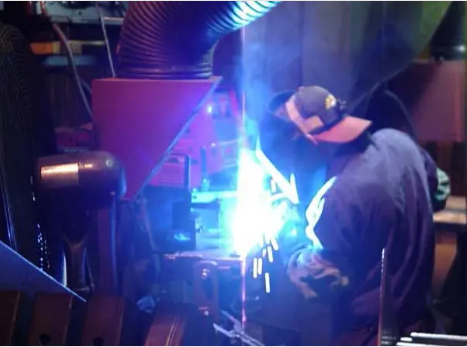
Welding processes are essential to modern manufacturing, but they also introduce airborne hazards that can significantly impact workplace safety and air quality. Among the most effective tools for managing these hazards are welding smoke extractors, which are designed to capture and filter fumes directly at the source. Understanding how welding smoke extractors function across different welding methods—MIG, TIG, and stick welding—can help facilities make more informed air quality decisions.
Understanding Welding Smoke and Fume Hazards
Welding smoke contains a complex mixture of fine particulates and gases, including metal oxides, ozone, nitrogen oxides, and other potentially harmful substances. The composition and volume of smoke vary depending on the welding process, base metals, filler materials, and shielding gases used. Without proper extraction, these contaminants can accumulate in the breathing zone, increasing health risks and reducing overall indoor air quality.
MIG Welding and Smoke Extraction
Metal Inert Gas (MIG) welding is widely used in industrial environments due to its speed and efficiency. However, MIG welding tends to generate higher volumes of smoke compared to other methods, especially when welding coated or alloyed metals. Welding smoke extractors used for MIG welding often require higher airflow capacity and efficient particulate filtration to handle continuous fume generation. Source-capture solutions, such as extraction arms or hooded systems, are commonly used to intercept smoke before it disperses.
TIG Welding and Precision Air Control
Tungsten Inert Gas (TIG) welding typically produces less visible smoke, but this does not eliminate the need for effective fume control. TIG welding fumes can still contain ultrafine particles that are easily inhaled. Welding smoke extractors for TIG applications are often designed to provide precise, localized capture without interfering with the welder’s line of sight or shielding gas coverage. Low-noise operation and adjustable capture points are key considerations in these environments.
Stick Welding and High-Variability Fumes
Stick welding, or Shielded Metal Arc Welding (SMAW), is known for producing dense, highly variable smoke due to flux-coated electrodes. This process can release significant amounts of particulate matter and gaseous byproducts. Welding smoke extractors used for stick welding must be robust and adaptable, capable of handling fluctuating smoke volumes and heavier particulate loads.
Choosing the Right Welding Smoke Extractor
Selecting the appropriate welding smoke extractor depends on several factors, including welding type, workspace layout, duty cycle, and regulatory requirements. While no single system fits every application, effective smoke extraction plays a critical role in maintaining safer working conditions, supporting compliance, and improving long-term operational efficiency.
By understanding how welding smoke extractors perform across MIG, TIG, and stick welding, manufacturers and fabricators can take proactive steps toward cleaner air and healthier work environments—without compromising productivity.